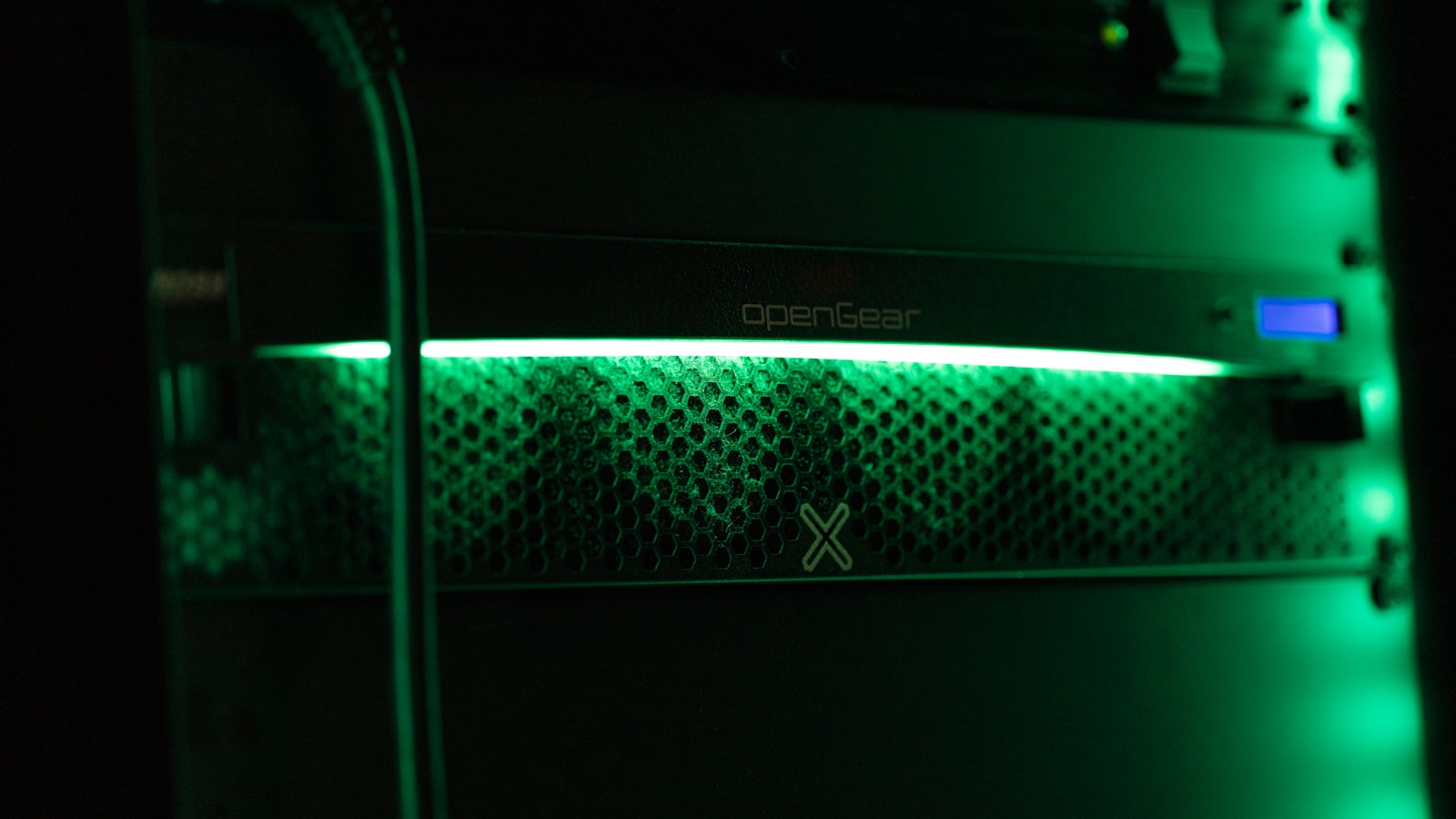
A data center usually does not fail the AI economy because it runs out of marketing language. It fails because the workload arrives faster than the power budget, the cooling design, the network fabric, or the operational discipline can handle. A model can be impressive on a demo call and still be useless in production if the underlying infrastructure cannot absorb spikes, isolate tenants, protect data, and keep latency predictable under load. That is why data centers are becoming the factories of the AI economy: not as a metaphor, but as a practical statement about where value is actually produced, constrained, and monetized.
For business owners, founders, marketers, developers, and investors, this shift matters because AI is not just software anymore. It is a stack of compute, storage, orchestration, and governance decisions wrapped around a business outcome. If you want reliable AI features inside WordPress, WooCommerce, Laravel, or an internal automation system, you are not really buying “AI.” You are buying access to infrastructure that can sustain inference, indexing, retrieval, logging, retries, and security without collapsing the rest of your platform. The winners will not be the loudest. They will be the teams that treat data centers like production systems, not like abstract cloud diagrams.
Why data centers now sit at the center of the AI economy
AI workloads are structurally different from the typical web stack. A content site can survive a few seconds of latency, a missed cache header, or a queue delay. An AI-assisted workflow often cannot. Retrieval must be fast enough to feel interactive. Embeddings must be generated and stored consistently. Model calls must be authenticated, rate-limited, and retried intelligently. Logs must show exactly what happened when a prompt, a document chunk, or a webhook payload went missing. That operational pressure pushes the center of gravity away from the application layer and into the data center layer, where power, networking, storage, and hardware scheduling determine whether the system is usable at all.
There is also a commercial reason this matters. In the old software model, value came from code distribution and user acquisition. In the AI model, value increasingly comes from who can run the workload safely, repeatedly, and at acceptable unit cost. That changes procurement, vendor selection, and architecture decisions. A founder does not need to own a data center, but they do need to understand what is being consumed behind the API. Otherwise they will design features that look cheap in a prototype and become expensive, fragile, or legally awkward the moment real users start pushing real data through them.
AI is a throughput business, not a brochure business
AI systems are throughput systems. Every request has a cost profile: tokens, vector search, cache hits, storage reads, orchestration steps, and possibly human review. If your infrastructure cannot process those requests with predictable latency and clear failure modes, the business model degrades quickly. This is especially true when AI is embedded into customer-facing systems such as support assistants, product recommendation engines, internal knowledge search, or content workflows in WordPress. The user does not care that the model was “state of the art” if the answer arrives late, the wrong document was retrieved, or the system quietly duplicated actions because the webhook fired twice.
The data center is where AI becomes measurable
Most business leaders talk about AI in terms of capability. Operators talk about it in terms of measurable constraints: GPU availability, memory pressure, storage IOPS, network egress, cache hit rate, queue depth, and error rate. That shift is healthy. It forces teams to stop pretending that AI is a magical layer and start treating it like any other production dependency. Once you do that, the architecture becomes clearer. You can decide what should run in WordPress, what should run in n8n, what should be delegated to a vector database like Qdrant, and what should stay in a controlled backend service with proper authentication and observability.
What this means for business owners and technical decision makers
For a business owner, the practical question is not whether data centers are important. The question is whether your AI initiative depends on infrastructure you can actually trust. If you are building an AI assistant for a service business, an internal document search tool, a WooCommerce recommendation layer, or a content workflow that uses AI to draft and classify content, the real risk is not the model itself. The risk is the chain of dependencies behind it: API availability, data freshness, prompt stability, permission boundaries, and the ability to recover from failure without corrupting content or exposing private data.
For technical decision makers, this means architecture decisions must be made earlier than usual. You cannot bolt on AI at the end of a WordPress project and expect it to behave like a plugin toggle. You need a payload contract, a retry policy, a logging strategy, and a decision about where sensitive data lives. If the AI feature touches customer records, contracts, order history, or internal knowledge, you also need a clear answer to data retention, access control, and staging parity. That is the difference between a controlled implementation and a very expensive experiment.
There is also a strategic implication for investors and operators. Companies that understand infrastructure economics can build better margins because they know where AI costs are created. They can choose when to cache, when to batch, when to queue, and when to keep a request synchronous. They can also avoid the classic trap of over-engineering a fancy AI layer that impresses stakeholders but creates operational debt. In practical terms, the teams that win are the ones that can connect business value to infrastructure discipline without turning the whole thing into a science project.
Practical architecture: where WordPress, n8n, and AI infrastructure fit
When I design an AI-enabled system for a WordPress-based business, I usually start by refusing to put everything inside WordPress. WordPress is excellent at content, editorial workflows, routing, permissions, and presentation. It is not the place to run expensive orchestration loops, long-lived queue workers, or brittle AI retry logic. That belongs in a more explicit automation layer, often n8n, with a backend service or API endpoint handling the parts that need stronger control. The point is not to avoid WordPress. The point is to keep WordPress doing the job it is good at while preventing it from becoming a catch-all integration sink.
A safe architecture usually looks like this: WordPress captures the event, validates the request, and sends a signed payload to an automation endpoint. n8n receives the webhook, checks the payload contract, enriches the data if needed, and decides whether to call an AI service, a vector database, or an internal API. The AI layer returns structured output, not just prose. The result is then written back to WordPress as post meta, custom fields, or a draft update, depending on the use case. If the workflow fails, the error is logged outside the public request path, and the system can retry without duplicating content or breaking the user experience.
WordPress plugin side: keep it narrow and explicit
The WordPress side should do only a few things well. It should expose a REST endpoint or hook into a known action, validate input, generate an idempotency key, and send a clean payload. If you are using a custom plugin, keep the logic focused on authentication, schema validation, and state transitions. Do not bury business logic in random hooks or template files. That is how maintenance becomes painful after the first update.
In practice, I prefer a small plugin with a settings page for webhook URL, secret, and feature toggles. The plugin should record each outbound request in post meta or a dedicated table if volume is high enough. That gives you traceability when a request is resent or when a response arrives late. It also makes debugging possible without combing through generic PHP logs and guessing which request belongs to which user action.
n8n side: orchestration, not magical glue
n8n is useful because it gives you visual orchestration, retries, branching, and API integration without forcing everything into custom code. But it still needs discipline. A workflow should have a clear start, a clear success path, and a clear failure path. Every node that can fail should either be retried intentionally or wrapped in a branch that records the failure and exits cleanly. If you use n8n as if it were a toy automation app, it will eventually behave like one. If you use it as an integration layer with versioned inputs and outputs, it becomes a reliable part of the stack.
The biggest mistake I see is letting n8n own too much state. Keep the source of truth in WordPress, a database, or a backend service. Let n8n move data, transform it, enrich it, and route it. Do not let it become the only place where critical business rules live. Workflows are easier to edit than code, which is exactly why they can become dangerous if nobody documents them or tests them after changes.
RAG and AI side: retrieval before generation
If the use case involves knowledge search, support, internal documentation, or content assistance, retrieval-augmented generation is usually the safer path than raw prompting. The model should not guess. It should retrieve relevant chunks from a controlled index, then generate an answer grounded in those chunks. That means your architecture needs document ingestion, chunking rules, embeddings, a vector store, and a response format that can be validated. A vector database like Qdrant is useful here because it gives you explicit control over indexing and retrieval behavior, which is preferable to stuffing everything into a prompt and hoping for the best.
The key trade-off is that RAG adds operational surface area. You now have to maintain document freshness, reindexing, embedding versioning, and access control. But that cost is often worth it because it reduces hallucination risk and makes answers more defensible. For a business, that is not a cosmetic improvement. It is the difference between an AI feature that can be trusted by staff and one that has to be ignored because nobody can verify where its answers came from.
Payload contract and data model: the part most teams skip
The fastest way to create brittle AI automation is to send a vague payload and hope every downstream service interprets it the same way. That works until a plugin update renames a field, a webhook is resent, or a workflow branch expects a value that no longer exists. A payload contract is not optional. It is the agreement between systems about what data exists, what is required, what is optional, and how to identify a duplicate request.
At minimum, the payload should include an idempotency key, a source system identifier, an event type, a timestamp, a schema version, and the relevant business object identifiers. If the workflow is AI-assisted, include the document source, user role, language, and any consent or privacy flags that affect processing. That lets the downstream system make sane decisions without guessing. It also makes logs useful because you can trace one event across WordPress, n8n, and the AI service.
{
  "schema_version": "1.0",
  "event_type": "ai_content_request",
  "idempotency_key": "wp_post_48291_2026-05-12T10:15:00Z",
  "source": "wordpress",
  "site_id": 12,
  "post_id": 48291,
  "user_id": 77,
  "language": "en",
  "content_type": "product_description",
  "document_refs": ["kb_104", "policy_22"],
  "privacy": {
    "contains_personal_data": false,
    "retention_days": 30
  },
  "callback_url": "https://example.com/wp-json/webcosmonauts/v1/ai-callback",
  "signature": "hmac-sha256..."
}
That structure is boring, and that is exactly why it works. It gives every system enough information to validate, route, and audit the request. If you later add a second automation path for a different post type or a different language, you can version the schema instead of rewriting the entire workflow. That is the difference between scalable integration and a pile of undocumented exceptions.
What usually goes wrong in AI infrastructure projects
Most failures are not dramatic. They are small, repeated, and expensive. A webhook fires twice because the sender retried after a timeout. The workflow creates duplicate drafts because nobody implemented idempotency. A plugin update changes a meta key, and the AI system starts writing output to the wrong field. A model call times out, the retry policy is too aggressive, and the system amplifies the outage by sending a burst of repeated requests. None of this is exotic. It is what happens when teams assume that a successful demo proves production readiness.
Another common failure is mixing public and private data without a clear boundary. A support assistant is fed internal documents that were never meant to be searchable by all users. A content workflow sends customer notes to a third-party API without a data processing review. A developer stores API keys in plugin options and exposes them in an admin screen that too many people can access. These are not AI problems. They are architecture and governance problems that AI makes more visible.
There is also a performance trap. Teams often build AI features on top of the same request-response cycle used for normal page rendering. That is a bad idea if the AI call is slow or variable. The safe path is to queue the work, return a pending state, and let the system update the result asynchronously. Users can tolerate a short delay if the interface is honest about it. They cannot tolerate a page that hangs because a model endpoint was busy or a vector search took too long.
Duplicate requests and idempotency failures
Duplicate requests are the classic automation bug. They happen when a sender retries after a timeout, when a user double-submits a form, or when a cron job overlaps with itself. The fix is not hope. The fix is an idempotency key stored in a place that both the sender and receiver respect. If the same key arrives again, the system should recognize that the work already exists and return the existing result instead of creating a second one.
Schema drift after plugin or API changes
Schema drift is what happens when one system changes a field name or data type and nobody notices until production breaks. This is common in WordPress environments because plugins evolve, custom fields get renamed, and developers forget that integrations depend on stable keys. Version your payloads, validate them on receipt, and keep a changelog for every field that matters. If a field is deprecated, support both versions during the transition instead of forcing an immediate cutover.
Silent failures in AI-generated output
AI output can fail quietly. The response may be syntactically valid but semantically wrong, incomplete, or off-brand. That is why structured output matters. If the workflow expects a title, summary, tags, and a confidence score, then the model should return those fields in a predictable format. If a field is missing or malformed, the workflow should stop and log the error rather than writing half-finished content into WordPress.
Security, authentication, and data safety
AI infrastructure is only useful if it is safe enough to run on real business data. That means authentication must be explicit, not implied. Webhook endpoints should not be public without a secret, signature verification, or both. API keys should be stored in environment variables or a secure secrets manager, not hardcoded in plugin files or exposed in the admin UI. Access to the WordPress plugin settings page should be limited to the right capability, and the automation layer should reject payloads that do not match the expected signature.
Data safety also depends on minimizing what you send. If a workflow only needs a product title and a category, do not send the full customer record. If a support assistant only needs document chunks, do not send raw databases or unrelated personal data. This is especially important when integrating external AI services. The safest implementation path is to classify data first, strip unnecessary fields, and send only what is required for the task. That reduces exposure and makes compliance easier to defend if anyone asks questions later.
For WordPress specifically, I recommend separating public-facing actions from privileged actions. Public forms should write to a staging queue or a safe intermediary table. Administrative actions can trigger heavier workflows, but only after permission checks and nonce validation. If you are exposing a REST endpoint, verify both authentication and intent. A secure endpoint that accepts any payload is still a problem if it can be abused to trigger expensive AI calls or overwrite content.
Maintenance and monitoring: the part that keeps the system alive
Maintenance is where most AI initiatives become either dependable or embarrassing. A workflow that works today will not necessarily work after a plugin update, a model change, a new content type, or a shift in rate limits. You need monitoring that tells you when the system is healthy, when it is degraded, and when it is quietly drifting out of spec. That means error logs, execution history, latency tracking, and periodic test runs against staging.
In practice, I like to monitor four things: request volume, failure rate, duplicate detection, and downstream write success. If n8n receives a spike in webhooks, I want to know whether that spike is legitimate or the result of a resend loop. If the AI service starts timing out more often, I want to know whether the issue is the model, the network, or the prompt size. If WordPress is receiving results but not persisting them, I want the logs to show whether the problem is a permission issue, a meta key mismatch, or a database write failure.
Testing after change is non-negotiable. Any plugin update, API version change, or schema modification should trigger a staging validation. The test does not need to be fancy. It needs to confirm that the payload still matches, the callback still works, retries behave correctly, and the output lands in the right place. If you do not test after changes, you are not maintaining an automation system. You are gambling with one.
Business value: why this infrastructure work pays off
The business value of treating data centers as the factories of the AI economy is straightforward: you get more reliable products, clearer cost control, and fewer surprises when usage grows. That matters whether you are a small business automating content operations or a larger team building AI-assisted internal tools. Reliable infrastructure reduces support noise, prevents duplicate work, and makes your team faster because they are not constantly compensating for brittle integrations.
There is also a strategic advantage in having an architecture that can evolve. A company with a clean payload contract, a controlled automation layer, and a sensible AI retrieval stack can add features without rebuilding the whole system. That is especially valuable in WordPress environments, where many businesses outgrow plugin-only solutions but do not need a full custom platform rewrite. The right architecture lets you keep WordPress where it is strongest while extending it with automation and AI in a way that remains maintainable.
From an investment perspective, infrastructure discipline improves resilience. Systems that are observable, versioned, and authenticated are easier to operate and easier to sell. They also create less technical debt, which is important because AI features tend to expand once they prove useful. If the foundation is weak, every new feature multiplies the mess. If the foundation is sound, you can scale the business without turning every release into an incident.
Implementation example 1: WordPress to n8n to AI-assisted content workflow
Suppose a content team wants to generate structured drafts for product pages. The WordPress plugin captures the request when an editor clicks a button in the admin area. It sends the post ID, product attributes, tone settings, and a unique idempotency key to an n8n webhook. n8n validates the payload, fetches any missing product data from WooCommerce, and sends a normalized prompt to an AI service. The AI returns JSON with title suggestions, summary, bullet points, and a risk flag if the input is incomplete. n8n writes the result back to WordPress as draft content and logs the execution ID.
This setup is useful because it keeps the editorial system in WordPress while moving the orchestration into a layer that can handle retries and branching. It also gives you room to add quality controls. For example, if the AI output confidence is low or the product description is too sparse, the workflow can stop and mark the draft for manual review. That is a much safer model than auto-publishing generated text and hoping the result is acceptable.
Implementation example 2: internal knowledge search with RAG
Now consider a support team that needs fast answers from internal documentation, policy pages, and product notes. The safest path is to ingest those documents into a controlled index, generate embeddings, and store them in a vector database. A WordPress-based admin interface can let staff search the knowledge base, but the actual retrieval should happen in a backend service or n8n workflow that enforces permissions and document scope. The AI model should only answer from retrieved chunks, and the response should include references to the source documents used.
This reduces hallucination and makes the system auditable. If a support agent sees an answer they do not trust, they can inspect the retrieved chunks instead of treating the model as an oracle. That is a much better operational posture than asking the model to “know everything” and then discovering that it confidently blended together unrelated policies. In business terms, the value is faster resolution with less risk of inventing answers.
Decision framework: when to build, when to queue, when to keep it simple
Not every AI idea deserves a complex architecture. If the task is low-risk, low-volume, and not tied to sensitive data, a simpler implementation may be enough. But as soon as the workflow touches customer records, revenue operations, editorial production, or internal knowledge, you should move toward a more disciplined design. The test is simple: if a duplicate request, a timeout, or a malformed payload would create business damage, then you need idempotency, logging, and a controlled retry path.
- If the action must feel instant and can tolerate minimal variation, keep it synchronous but validate hard.
- If the action can take a few seconds and may fail intermittently, queue it.
- If the action touches private or regulated data, minimize payloads and enforce authentication.
- If the output will be written back into WordPress, version the schema and test the write path.
- If the workflow needs knowledge grounding, use retrieval before generation.
This framework is intentionally plain. It keeps teams from overbuilding and under-securing at the same time. The safest implementation path is usually not the fanciest one. It is the one that makes failure visible, contained, and recoverable.
Practical checklist before you ship
- Define the payload contract and version it.
- Add an idempotency key to every event that can be retried.
- Store webhook secrets and API keys outside public code paths.
- Validate input on the WordPress side before sending anything downstream.
- Keep n8n workflows small enough to understand and debug.
- Log request IDs, execution IDs, and callback outcomes.
- Use queue-based processing for slow or variable AI calls.
- Test duplicate submissions, timeouts, and partial failures in staging.
- Review which data is actually necessary before sending it to any AI service.
- Recheck the workflow after plugin updates, API changes, or schema edits.
What the future looks like for AI infrastructure
The next phase of the AI economy will not be defined by who can generate the most text. It will be defined by who can operate AI reliably inside real businesses. That means data centers, cloud regions, edge systems, and automation stacks will matter more than the headlines suggest. Companies will increasingly compete on latency, data control, integration quality, and the ability to keep AI features stable while costs remain visible. The infrastructure layer will become a strategic differentiator, not just an IT concern.
For WordPress businesses, this is good news. It means you do not need to abandon the platform to participate in the AI economy. You do need to build around it intelligently. WordPress can remain the content and business interface, while n8n, APIs, and retrieval layers handle the heavy lifting. That combination is practical, scalable, and much safer than bolting random AI features onto a site and hoping production behaves like a demo.
Conclusion
Data centers are becoming the factories of the AI economy because they are where AI work is actually produced, constrained, and paid for. The businesses that understand this will build better systems: cleaner payload contracts, safer automation, clearer logs, stronger security, and more reliable user experiences. The businesses that ignore it will keep chasing features that look impressive in a prototype and then collapse under real-world usage.
If you are planning WordPress development, custom plugins, WooCommerce automation, Laravel integrations, n8n workflows, RAG search, or AI-assisted content systems, the safest path is to design the architecture before the enthusiasm outruns the implementation. WebCosmonauts builds exactly that kind of practical stack: controlled, maintainable, and tuned for real business operations. If you want help turning an AI idea into something dependable, contact WebCosmonauts for WordPress development, automation, or AI integration.